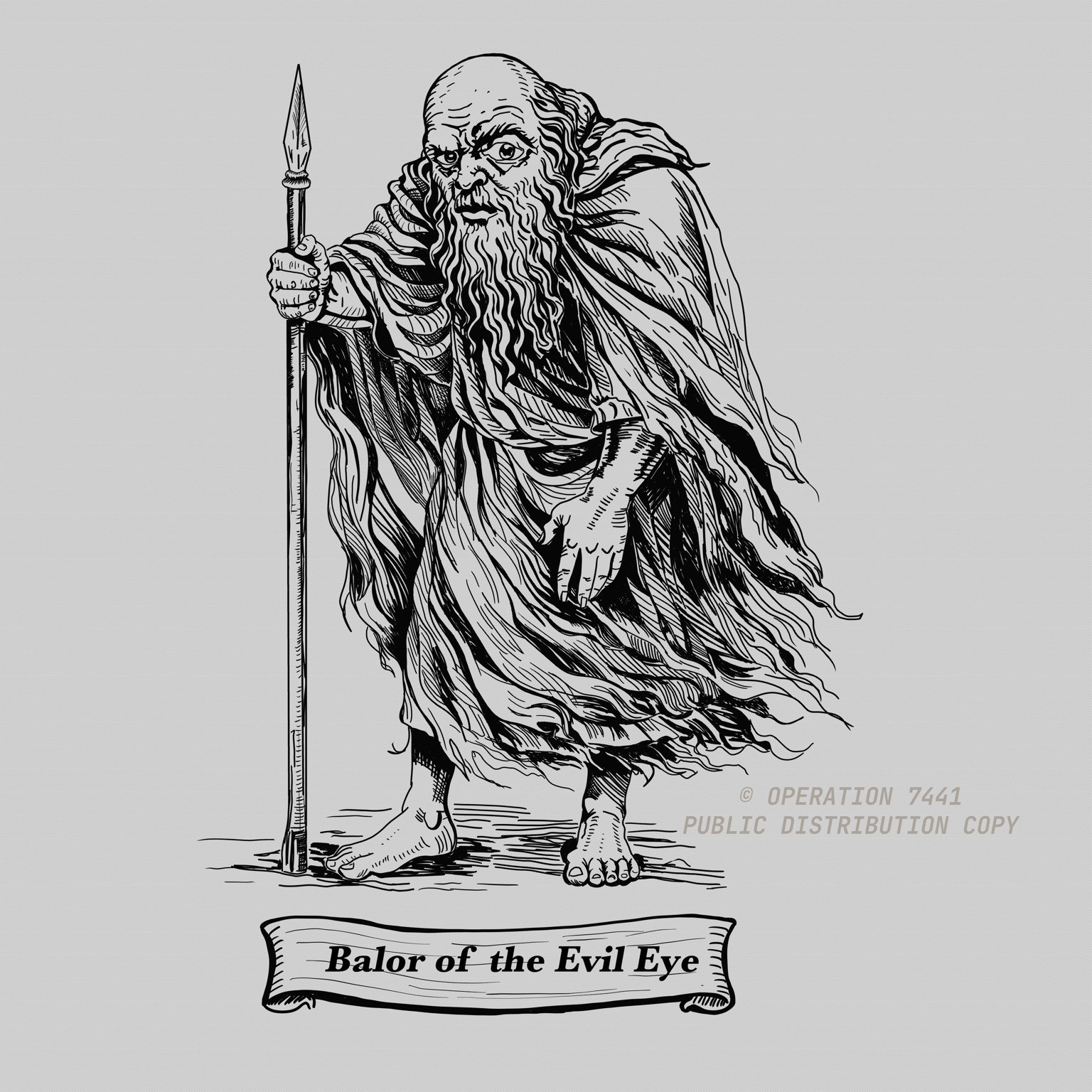
CM-001-B // REFERENCE DISPLAY COPY
Entity Overview
Balor appears throughout early Irish tradition as the one-eyed king of the Fomorians. His single eye was said to unleash devastation when opened, bringing death, blight, or destruction upon those who met its gaze.
Though remembered as a tyrant, later traditions preserved him as one of Ireland's most enduring mythological figures.
V.E.R.A. Assessment
Independent cultural documentation remains unusually consistent across surviving references.
CM-001-B // REFERENCE DISPLAY COPY
Source
- Publication:
- Lore of the Western Sea
- Plate:
- Balor of the Evil Eye
- Attributed Author:
- Maurey Ellis
- Estimated Date:
- c. 1921
- Integrity:
- 100%
Published Excerpt
Balor, remembered among the Fomorians, is described as possessing a single destructive eye whose opening brought devastation upon the battlefield. Though many variations survive, the tale consistently ends with his defeat at the hand of Lugh during the Second Battle of Mag Tuired.
— Lore of the Western Sea
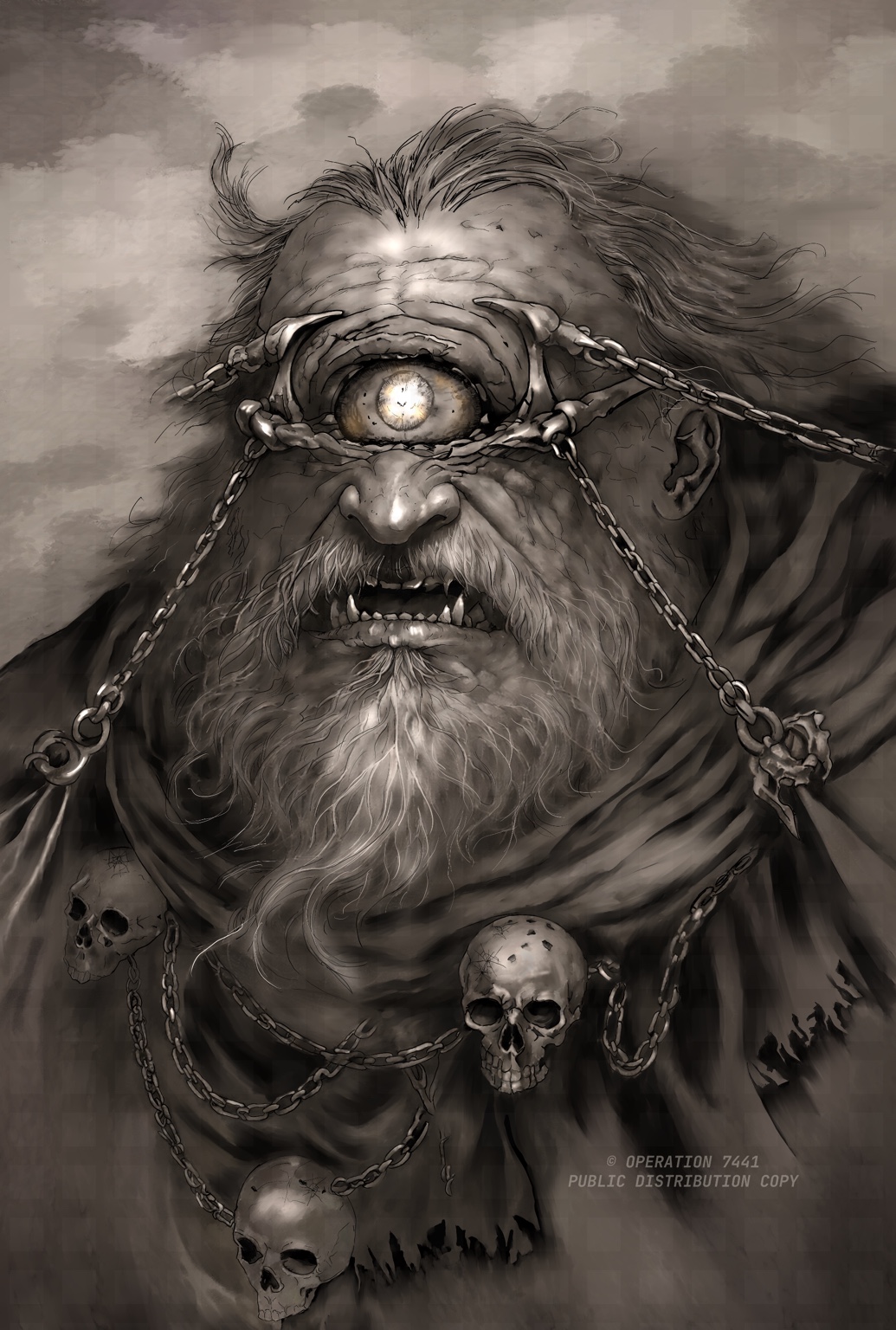
CM-001-A // PUBLIC DISTRIBUTION COPY // RECONSTRUCTION LAYER ACTIVE
Source
- Recovered from:
- Maurey Ellis Hoard
- Estimated Date:
- 1922–1924
- Medium:
- Ink, Graphite & Gouache Washes
- Condition:
- Excellent
- Integrity:
- 98%
Recovered Excerpt
No tale in Ireland is told with greater certainty than that of Balor's eye, though no two men agree upon what the eye truly did. Some insist it carried pestilence, others fire, while still others swore it was simply death itself. Whatever the truth, every account agrees on one point: no man willingly stood before it.
— Maurey Ellis, Journal IV
V.E.R.A. Analysis
Observed deviations compared with the published folklore plate:
- Increased ocular scale
- Symbolic chain restraints
- Cranial ornamentation
- Elevated mortality symbolism
Deviation Index: 41%
SOURCE B // PUBLISHED FOLKLORE PLATE
SOURCE A // MAUREY ELLIS HOARD
Comparative Analysis
The published illustration presents Balor in a restrained documentary style. The later journal illustration introduces anatomical exaggeration, symbolic chains, funerary imagery, and heightened emphasis on the eye. These additions are absent from the earlier published record.